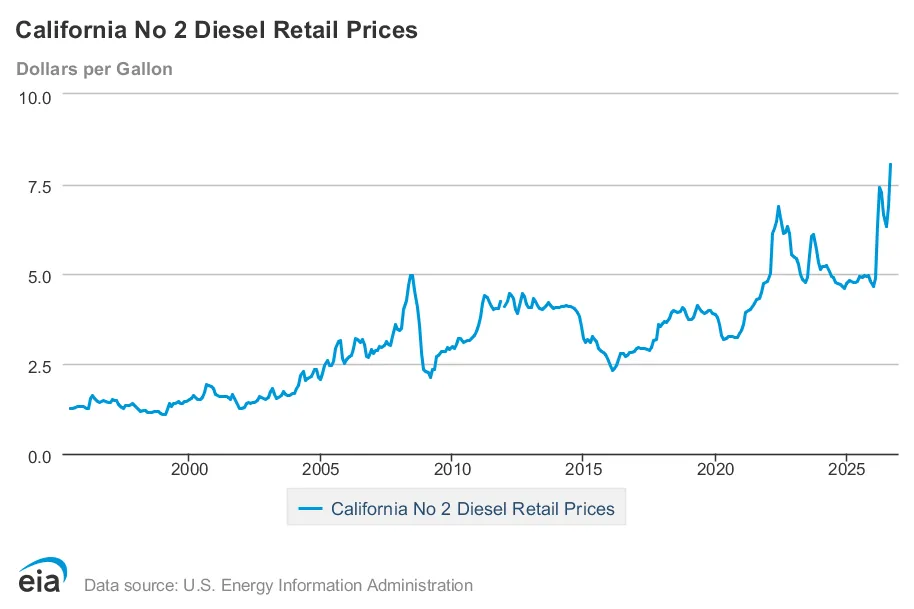
California fence contractors are adjusting their operational strategies as retail gasoline prices clear $6.00 per gallon across the state. Driven by West Coast refinery maintenance, strict state fuel regulations, and an increase in the state excise tax to 63.4 cents per gallon on July 1, pump prices have risen over 30 percent compared to last year. Diesel costs are jumping by the week. Rising fuel costs threaten to erode operating margins.
Understanding why fuel costs disproportionately affect fencing operations requires examining the underlying operational structure of a specialty trade business.
Fence construction requires moving heavy materials—such as concrete bags, steel posts, pressure-treated lumber, and augers—directly to job sites across spread-out service regions. Unlike electrical or plumbing contractors who often transport lighter inventory in smaller vans, fence contractors rely on heavier trucks. These loaded vehicles average significantly lower fuel economy, consuming more gallons per billable job.
Fencing projects typically require multiple trips to a single site. A standard installation involves at least three distinct visits: an initial site estimate and marking layout, setting posts in concrete to cure, and returning to build or hang fabric or panels. When crews travel 30 to 50 miles each way between the shop, material yard, and job site, the total mileage for a single residential project easily exceeds 200 miles.
Most residential and commercial fencing bids use fixed-rate contracts based on direct linear foot pricing for materials and labor. When contractors calculate bids using static overhead percentages, they fail to isolate transportation expenses. As fuel prices fluctuate rapidly, those fixed estimates fail to capture the true cost of trips, forcing contractors to absorb the extra cost out of their profit margin.
Historically, fuel was treated as a minor, static line item within general overhead rather than a variable job expense. Because contractors rarely itemized transportation costs separately, price increases went unnoticed until month-end financial reviews revealed lower gross profit margins.
With thin net margins in competitive California markets, unbudgeted transportation expenses directly diminish bottom-line income. A fleet of three work trucks driven 1,500 miles per month at 10 miles per gallon consumes 450 gallons monthly per vehicle. At $6.18 per gallon, fuel costs $2,781 per month—an increase of nearly $800 per month compared to last year's rates. Unaddressed, this expense can eliminate a contractor's profit margin on smaller jobs.
Strategies to Protect Profit Margins
California fence contractors are adopting several practical operational shifts to insulate their businesses from high fuel prices:
- Implement a Dynamic Fuel Surcharge: Add a transparent, itemized fuel surcharge on bids for jobs beyond a set radius (e.g., 15 miles from the yard). Index the charge to the California Weekly On-Highway Diesel and Gasoline prices published by the U.S. Energy Information Administration.
- Consolidate Site Visits: Combine site estimates with digital layout tools or remote video calls when possible. Schedule post-setting and material delivery on the same day by coordinating with suppliers for direct job-site drops.
- Optimize Fleet Dispatching: Utilize GPS routing software to eliminate unnecessary back-tracking and enforce anti-idling policies. Stagger crew start times to avoid peak California freeway congestion, reducing fuel wasted in stop-and-go traffic.
- Audit Vehicle Maintenance: Maintain proper tire pressure on heavy trailers and work trucks, which improves fuel economy by up to 3 percent. Remove unused equipment, forms, and scrap metal from truck beds to eliminate extra weight.